Voice search is changing how individuals perform searches. Instead of inputting shorter phrases like “best hotels Paris,” users are now asking full questions, like “What are the best hotels to stay in while in Paris?” This shift in behavior is increasing the importance of long-tail keywords, as they are essential for your content to rank for voice search queries, which tend to be longer, conversational, and more context driven.
In this blog, we’ll explain what long-tail keywords are, why they matter for voice SEO, and how you can use them effectively to boost your online visibility.
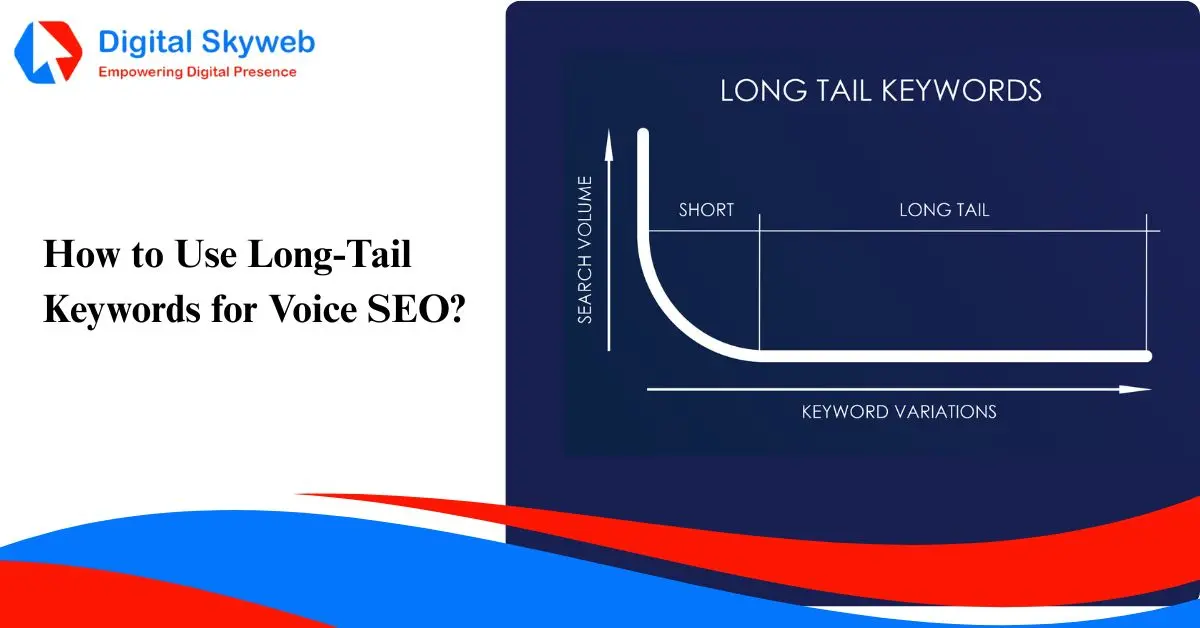
Long-tail keywords are longer, more specific keyword phrases that target niche topics or user intent.
For example:
- Short keyword: “digital marketing”
- Long-tail keyword: “best digital marketing agency for small businesses”
These keywords may have lower search volume but attract highly targeted traffic. And because they match how people speak, they’re perfect for voice search optimization.
Why Should We Use Long-Tail Keywords for Voice SEO
Voice queries are conversational by nature. People talk to their devices as if they’re talking to a friend. That means search phrases are longer and more natural.
For instance:
- Typed search: “weather London”
- Voice search: “Hey Google, what’s the weather like in London today?”
Here’s why long-tail keywords are essential for voice SEO:
- They match natural language patterns.
- They capture user intent — users ask specific questions.
- They have lower competition, making it easier to rank.
- They improve conversion rates because they target ready-to-act users.
So, if you want your content to appear in voice search results, long-tail keywords are your best bet.
How to Find Long-Tail Keywords for Voice Search
The process of identifying the right long-tail keywords begins with understanding your audience and their language. Here are some reputable methods to find these phrases:
1. “People Also Ask” and “Related Searches”
Using the “People Also Ask” section provided by Google is a great way to identify conversational phrases. These are real questions that users are searching, which is ideal for voice search SEO.
For example:
If your main topic is “home cleaning services,” appropriate voice-related keywords would be
• “What is the best home cleaning service near me?”
• “How much are professional cleaning services?”
2. AnswerThePublic
This is a tool used to visualize the questions, prepositions, and comparisons that users are searching for. This is great for finding who, what, when, where, and how questions relative to voice search.
3. Keyword Research Tools
Semantic keyword research tools like SEMrush, Ahrefs, and Ubersuggest can provide variations of keywords with low competition and high intent. Filter for phrases of 4 words or more—these are most likely long-tail keywords and conversational.
4. Use Your Analytics on Your Site
Check your Search Console inquiries to see what longer search phrases have brought users to your site. These can be used for your next content updates.
How to Use Long-Tail Keywords in Your Content
Once you have your list of keywords, the next step is implementing them naturally. Here’s how to do it effectively:
1. Use Question-Based Headlines
Voice searches often begin with question words like “how,” “what,” “where,” “why,” and “who.”
Turn your long-tail keywords into titles or subheadings.
Example:
- Keyword: “how to clean hardwood floors naturally”
- Blog Title: “How to Clean Hardwood Floors Naturally: Step-by-Step Guide”
This structure improves your chances of ranking for both text and voice searches.
2. Write in a Conversational Tone
Voice search content should sound natural when read aloud. Avoid robotic or keyword-stuffed sentences.
✅ Example:
“You can clean hardwood floors naturally by mixing vinegar and water.”
❌ Instead of:
“Clean hardwood floors naturally using a vinegar water hardwood floor natural cleaner method.”
Keep it simple, friendly, and human.
3. Optimize Your FAQ Section
Add an FAQ section targeting your long-tail keywords in question form.
Each FAQ should:
- Be around 40–50 words
- Directly answer the question
- Include the keyword naturally

Example:
Q: How do I improve my voice search rankings?
A: You can improve your voice search rankings by using long-tail, conversational keywords and providing quick, direct answers to user questions.
This approach increases your chance of being featured as a voice snippet or featured snippet.
4. Place Keywords Strategically
Use your long-tail keywords in key SEO elements:
- Title (H1)
- Subheadings (H2/H3)
- Meta description
- First 100 words of your post
- Alt text for images
- Internal links
But remember — don’t overdo it. Maintain a natural flow and readability.
5. Combine Long-Tail Keywords with Local SEO
Many voice searches include local intent, like “near me” or “closest.”
Example:
- “best vegan restaurants near me”
- “where can I find affordable dentists in Boston”
Include your city or neighborhood name in your long-tail keywords to capture local voice search traffic.
Examples of Long-Tail Keywords for Voice SEO
Here are some examples by niche:
Healthcare:
- “What’s the best dentist near me for teeth whitening?”
- “How much does laser eye surgery cost?”
E-commerce:
- “Where can I buy titanium jewelry online?”
- “What are the most durable phone cases for iPhone 15?”
Travel:
- “What’s the best time to visit Paris for couples?”
- “Which hotels in Dubai offer free airport pickup?”
Service Business:
- “How do I find affordable web design services near me?”
- “What’s the cost of monthly SEO packages for small businesses?”
Common Mistakes to Avoid
❌ Using overly generic short keywords
❌ Keyword stuffing your content
❌ Ignoring question-based queries
❌ Skipping local modifiers (like city or “near me”)
❌ Writing content that sounds unnatural when spoken aloud
Avoiding these mistakes ensures your content is readable, relevant, and optimized for both text and voice search.
As AI and voice assistants improve, semantic search and natural language processing (NLP) will only continue to increase the importance of long-tail keywords. Search engines are going beyond matching to simple keywords; now they are able to understand intent. So, the emphasis is on writing content that is helpful to real users and answers their questions while being written in a clear, conversational, and simple manner.
To conclude, long-tail keywords are going to be a key component of an effective voice SEO plan. Not only do they allow your content to better align with natural speech, but they also improve your chances of getting to rank in voice results and drive more qualified visitors. By doing the work of researching phrases that are conversational, writing in a human tone, and optimizing to local intent, you are making your content more visible—and more valuable—to users who search with the use of voice.