If you’re in real estate and your Google Business Profile isn’t bringing calls, leads, or property inquiries, you’re not alone.
A lot of real estate agents create a profile, add a few photos, verify it once, and then forget about it. Months later, they wonder why competitors keep showing up higher on Google Maps while their business barely appears.
The truth is, ranking your Google Business Profile (GBP) for property searches is no longer about simply “having a listing.” Google wants to show businesses that look active, trustworthy, and genuinely helpful to local searchers.
Why You Need A Google Business Profile
Think about how people search today.
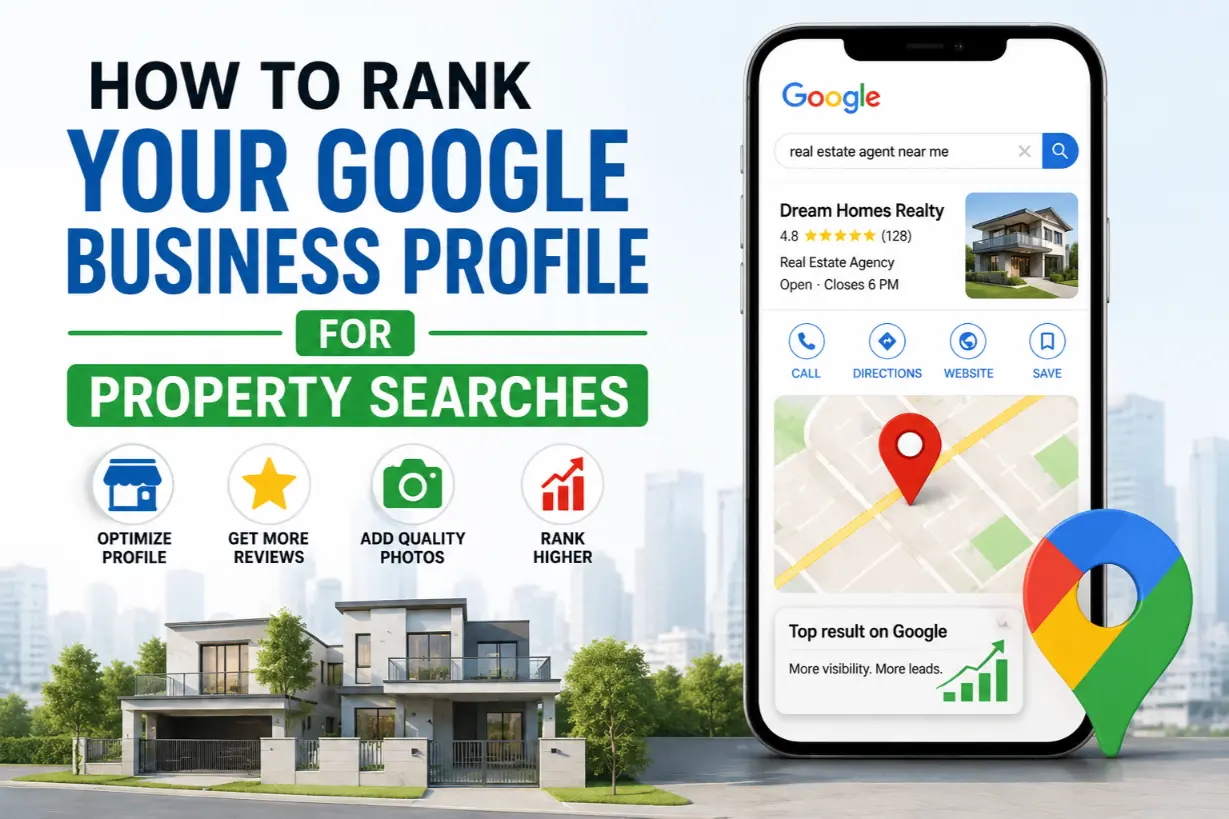
Most buyers and sellers don’t start by visiting a real estate website directly. They search things like:
- “real estate agent near me”
- “homes for sale in Bhubaneswer”
- “property consultant near me”
- “best realtor in BBSR”
And what do they see first?
Usually:
- Google Maps results
- reviews
- photos
- business profiles
In many cases, people decide who to contact before they even open a website.
That’s why your Google Business Profile has become one of the most important local marketing account for real estate businesses.
The biggest mistake most property businesses make
Most profiles fail because they look abandoned.
You’ll often see:
- outdated property photos
- incomplete descriptions
- no recent updates
- generic service information
- unanswered reviews
Google notices inactivity. So do potential clients.
A profile that hasn’t been updated in six months doesn’t build confidence.
Real estate is a trust-based business. People want to work with agents who look active, responsive, and established in the local market.
Choose business category Wisely
One of the simplest mistakes is choosing the wrong primary category.
If you’re a solo realtor, “Real Estate Agent” may work better than “Real Estate Agency.” If you focus on commercial properties, your category setup should reflect that.
Google uses categories to understand what searches your business should appear for.
The problem is that many businesses select categories based on what sounds impressive instead of what customers actually search.Keep it accurate and relevant.
Don’t optimize your profile like a robot
A lot of businesses make their profiles unreadable trying to “do SEO.”
They stuff city names and keywords everywhere:
Best real estate agent in Cape Town for luxury property homes apartments real estate services…
It looks unnatural—and users immediately notice it.
Instead, write your business description like a real human explaining what you do.
Talk about:
- the areas you serve
- the type of properties you handle
- your experience
- what makes your service helpful
Natural language works better for both people and Google.
Photos influence rankings and trust
Real estate is visual. Your Google Business Profile should reflect that.
Profiles with consistent, high-quality photos often perform better because they increase engagement and trust.
Don’t just upload logos.
Add:
- property photos
- interiors and exteriors
- your office
- your team
- neighborhood highlights
- recently sold listings
And most importantly—keep uploading regularly.
Fresh activity signals that your business is active in the market.
One important thing: avoid relying heavily on stock images. Real photos build far more credibility.
Reviews
Reviews affect two things:
- trust
- local rankings
And in competitive property markets, both matter a lot.
But not all reviews are equally valuable.
A review like:
“Great service!”
is fine.
But detailed reviews help much more:
“Helped us find a family home in Durban quickly and made the buying process smooth.”
Detailed reviews naturally strengthen local relevance.
Also, respond to reviews consistently. It shows both Google and potential clients that you engage with customers professionally.
Even a simple thoughtful response helps.
Most real estate businesses ignore Google Posts completely
This is one of the easiest opportunities many businesses miss.
Google Posts allow you to keep your profile active by sharing:
- new listings
- recently sold properties
- market updates
- neighborhood insights
- home-buying tips
- investment advice
You don’t need to post daily.
Even posting once a week keeps your profile looking current and active.
And from an SEO perspective, activity matters.
Consistency across the internet still matters
Your business information should match everywhere online.
That includes:
- your website
- social media
- property directories
- local business listings
Your:
- business name
- phone number
- address
should remain consistent.
Even small differences can create confusion for Google over time.
Local SEO is heavily built on trust signals, and consistency helps strengthen those signals.
Proximity matters — but it’s not the only factor
Many people think Google Maps rankings are only based on location.
Location matters, but it’s not everything.
Google also looks at:
- profile activity
- relevance
- reviews
- engagement
- authority
- completeness of information
That’s why smaller local agencies often outrank larger companies in certain areas.
Businesses that actively serve and engage with specific neighborhoods usually perform better than businesses trying to target an entire region at once.
Your website still affects your Google Business Profile
Your GBP and website support each other.
If your website includes:
- local area pages
- property guides
- market insights
- neighborhood blogs
- updated listings
it strengthens your overall local relevance.
Google wants confidence that your business is genuinely connected to the area you serve.
Helpful local content helps build that connection naturally.
Things that quietly hurt your rankings
Some businesses unknowingly damage their visibility by:
- stuffing keywords into their business name
- buying fake reviews
- leaving profiles inactive
- uploading low-quality images
- ignoring customer messages
- keeping outdated information online
Shortcuts usually create long-term problems.
Google has become much better at detecting unnatural activity.
What actually works long term
Most successful Google Business Profiles follow the same pattern:
- consistent updates
- steady review growth
- real local engagement
- quality photos
- accurate information
- regular activity
Not hacks.
Not tricks.
Just consistent trust-building over time.
And honestly, that’s good news for smaller businesses. Because consistency is often more powerful than budget.
How long does it take to improve rankings?
This is probably the most common question.
The honest answer: it depends on your competition and market.
But most businesses start noticing improvements through:
- more profile views
- increased calls
- direction requests
- more inquiries from Maps
within a few months of consistent optimization.
Local SEO is usually gradual, especially in competitive property markets.
The businesses that win are usually the ones that stay active longer than everyone else.
Ranking your Google Business Profile isn’t really about “beating Google.”
It’s about becoming the business people trust when they search for property services locally.
An active profile with real reviews, helpful information, quality photos, and consistent updates naturally stands out.
And in real estate, trust often matters more than aggressive marketing.
You don’t need to do everything perfectly overnight.
But if you consistently improve your profile over time, Google—and potential clients—start noticing.